

Buying a used car without an inspection is how small compromises turn into four-figure repair bills. A tidy wash, a warm engine and a reassuring seller can hide a lot.
Workshop Service · Coventry
Check Inspection Availability →Buying a Used Car in Coventry?
Get a thorough workshop ramp inspection, OBD diagnostic scan, and road test before you buy.
Most used-car guides are written from the pavement. They tell you to check the oil and look for rust, but not what matters most, what is negotiable, and what should make you walk away. This guide is the workshop version: what we actually inspect, what faults we regularly find, and where an independent Coventry garage can give you more than a generic tick-box check.
Why a pre-purchase inspection is not optional
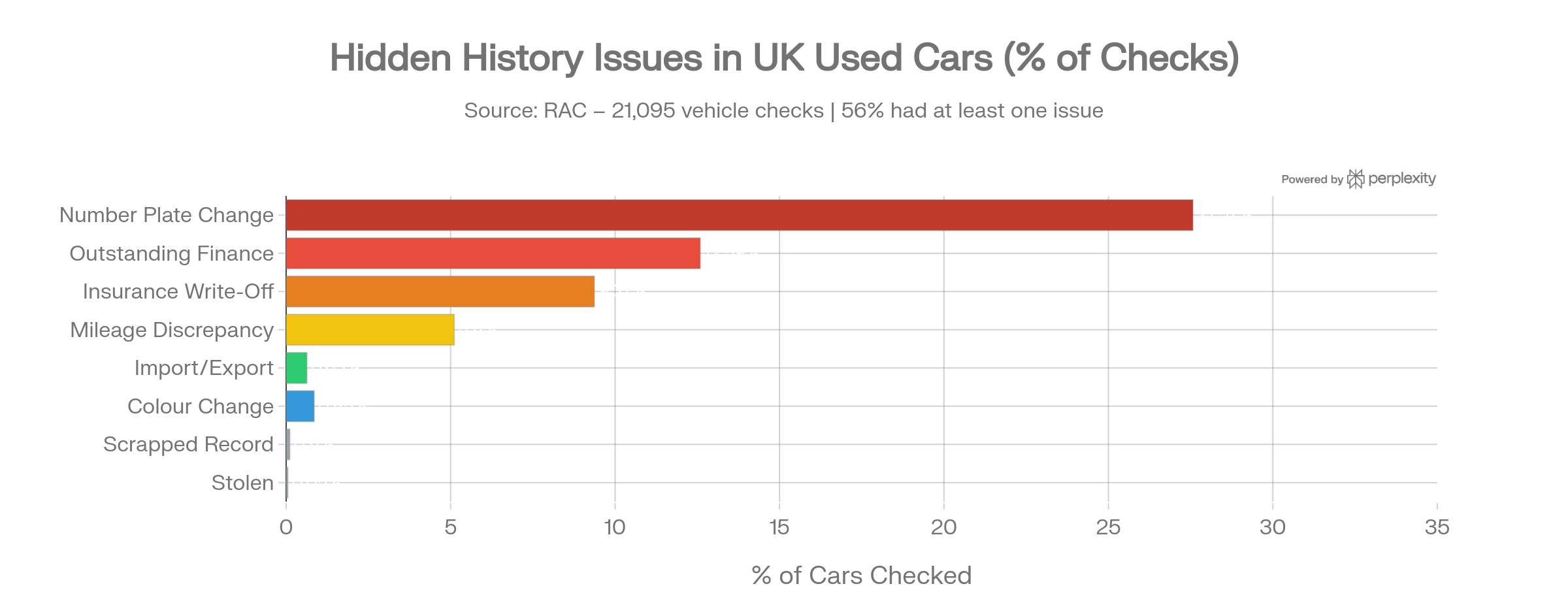
The UK used-car market is huge. According to SMMT, 7,807,872 used cars changed hands in 2025. With that volume comes risk. RAC analysis of more than 21,000 vehicle history checks found that 52% of cars had at least one hidden history issue, while AA Cars inspector data found around 70% had at least one mechanical or structural fault.
Quick stat check
More than half of used cars checked have a hidden history issue, around 1 in 4 carries outstanding finance, and write-off and mileage problems are far more common than most buyers assume.
What a proper inspection actually covers
A real pre-purchase inspection is not a quick walk-around with a torch. It starts before the bonnet is even opened and it ends only after the car has been driven, scanned and checked underneath.
1. Paperwork and history
- V5C and VIN checks to make sure the registration, VIN, colour and keeper details all line up
- MOT history review to spot mileage jumps, repeated advisories and suspicious gaps
- Finance and write-off checks because a cheap car is not cheap if it still belongs to a lender or has serious category history
- Plate-change and stolen-vehicle checks where appropriate
2. Exterior inspection
- Paint depth and panel consistency to spot filler, resprays and poor accident repairs
- Panel gaps and overspray around doors, bonnet, wings and boot shuts
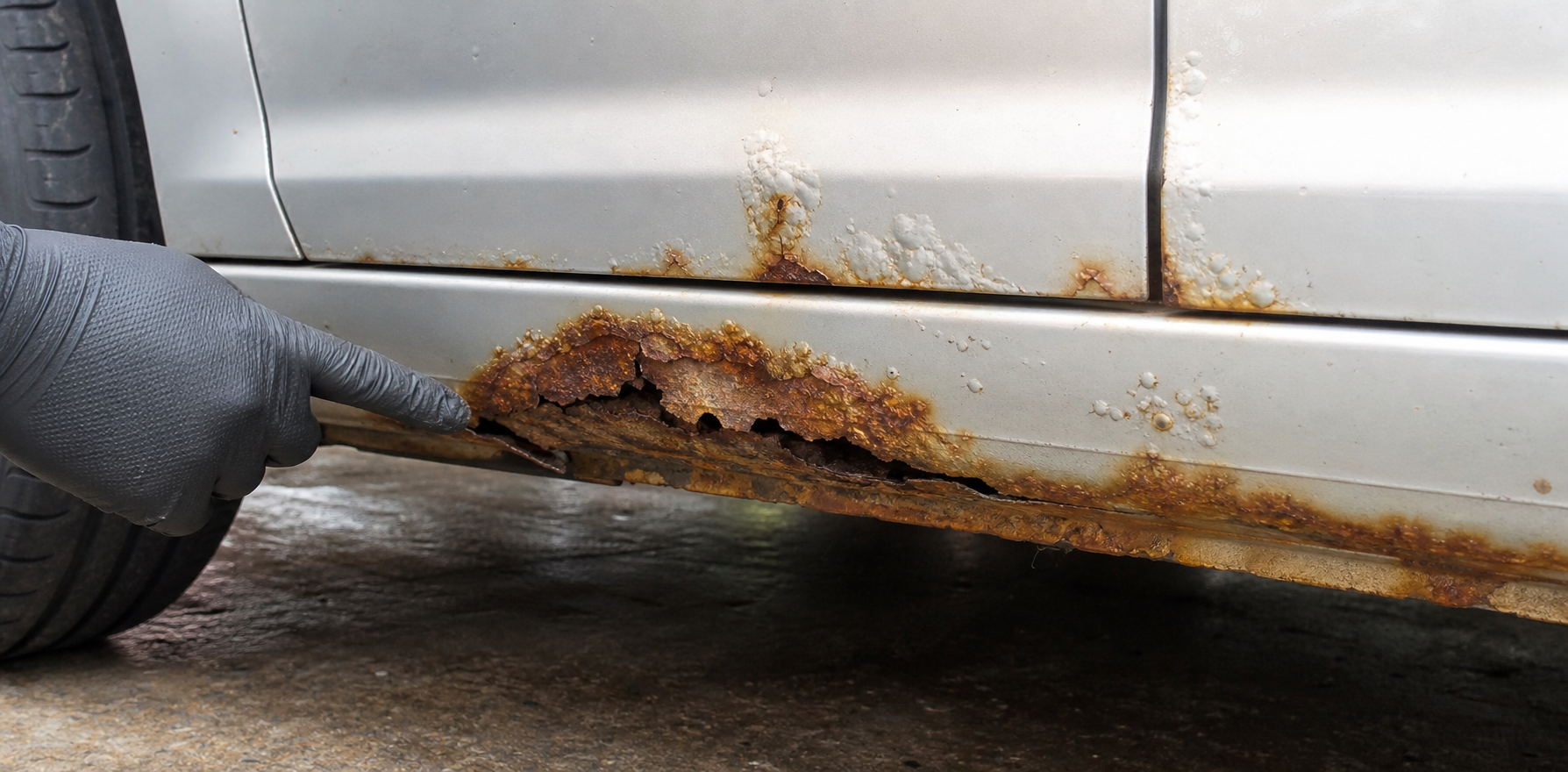
- Corrosion hotspots including arches, sills, boot floor and tailgate edges
- Glass, lights and tyre condition including uneven wear that points to suspension or alignment faults
3. Engine bay checks
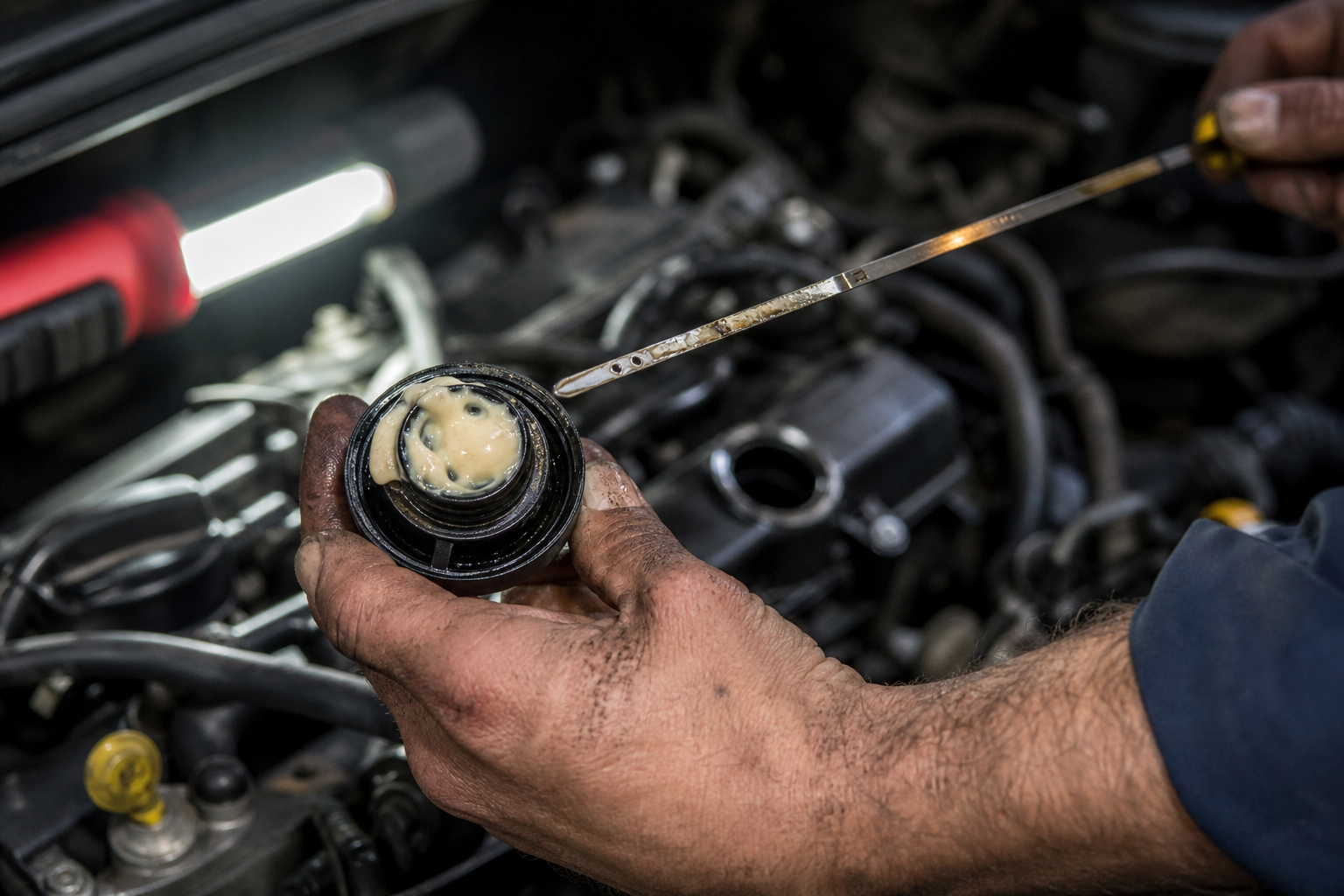
- Oil filler cap and dipstick for milky residue that can point to coolant mixing with oil
- Coolant level and condition for signs of neglect, contamination or internal loss
- Oil leaks and fresh cleaning because a suspiciously spotless engine bay can be as telling as a dirty one
- Visible belts, hoses and warning lights plus an OBD scan to catch faults that have been recently cleared
4. Underbody and ramp inspection
This is where a local workshop inspection can beat a driveway inspection. Once the car is on the ramp, you can see what a seller hopes you never will.
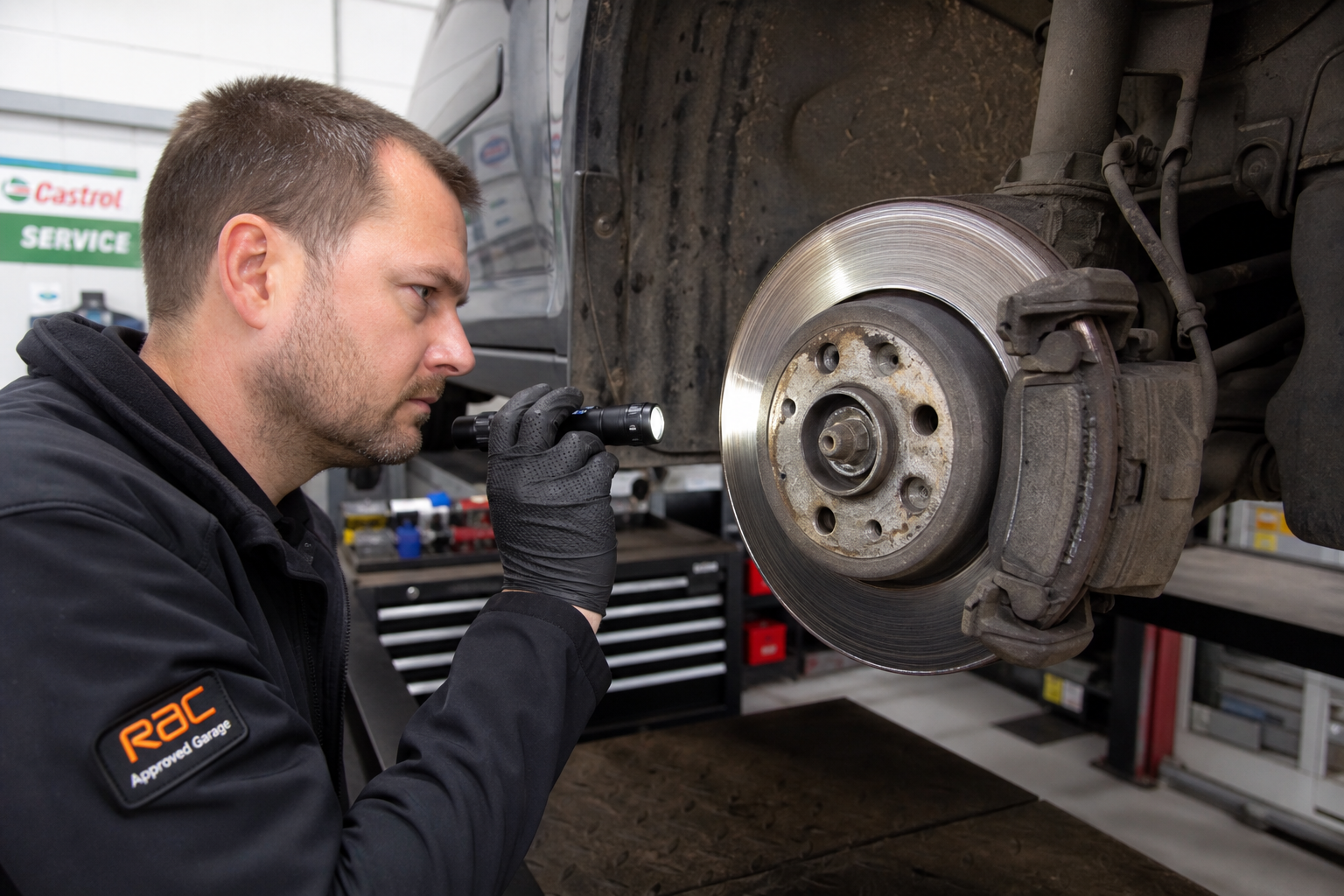
- Brake lines, hoses and discs for corrosion, thickness and wear
- Suspension components including bushes, ball joints, shocks and links
- Exhaust and structural condition for leaks, patches and poor repairs
- Leaks from below including gearbox, sump and differential seepage
5. Brakes and safety-critical wear
Brake faults are one of the most commonly found issues in pre-purchase inspections. We check disc lips, pad thickness, caliper condition, handbrake hold and the condition of the brake fluid. A car that feels "fine" on a short drive can still need hundreds of pounds' worth of brake work.
6. OBD diagnostic scan
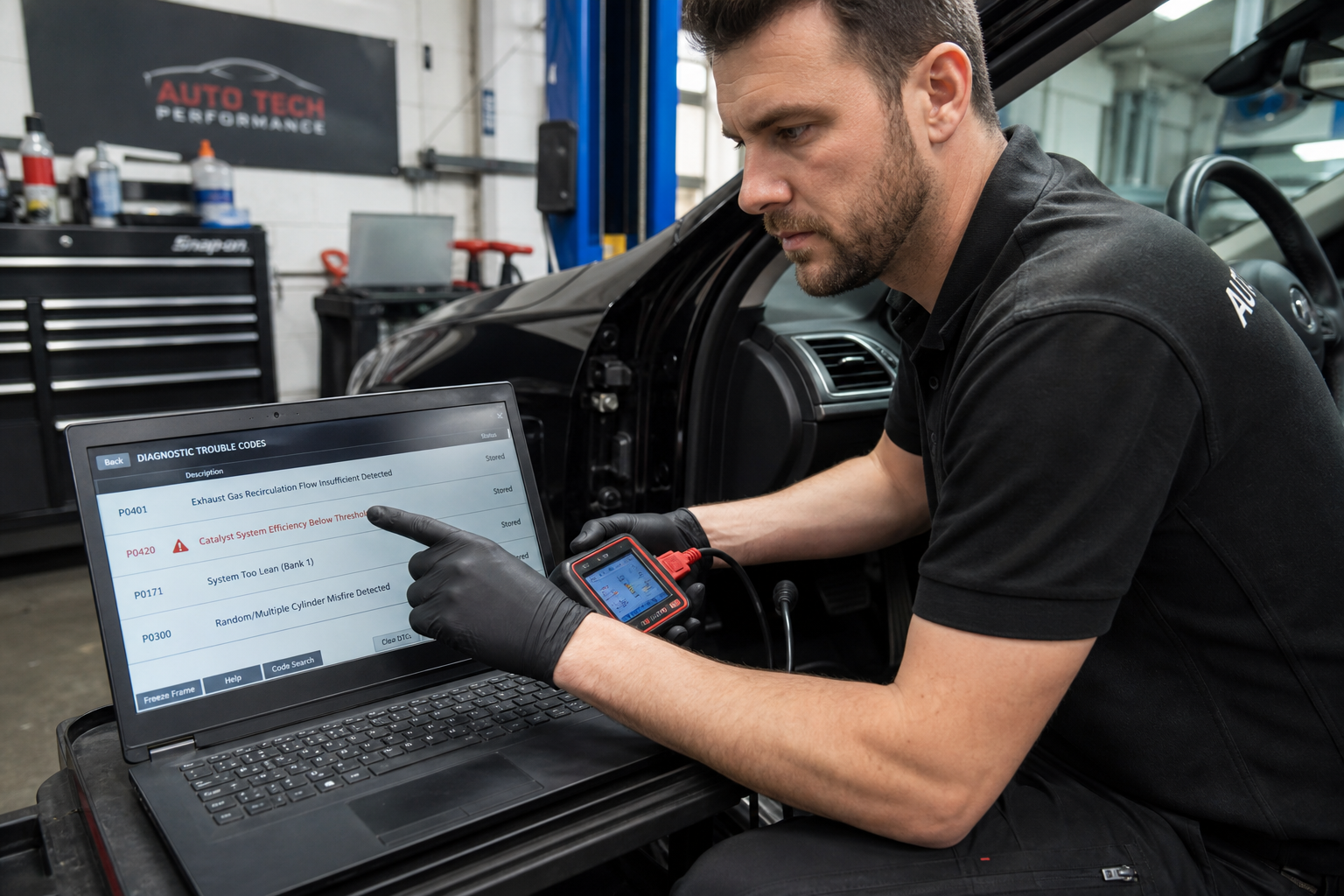
This is where hidden issues show up. A seller may clear a warning light before you arrive, but the code is usually still there. We commonly uncover misfire faults, ABS faults, airbag faults, DPF issues, emissions problems and gearbox-related warnings that never appear during a rushed viewing.
7. Test drive, done properly
- Cold-start smoke that suggests oil burning or head-gasket trouble
- Clutch bite, slip and judder
- Gear selection quality on manual and automatic cars
- Steering pull, suspension knocks and timing-chain rattle across different road surfaces
The most common faults we find - and what they can cost
Based on AA Cars inspection data and real workshop experience, the faults below are the ones worth watching for because they are common, expensive, or both.

- Brake issues - often around £400 to put right once discs, pads or calipers are involved
- Previous accident damage - cost varies, but poor repair quality can hurt value and safety
- Corrosion - especially around arches, sills and boot floors
- Clutch faults - commonly £600 to £800 on many everyday cars
- Timing chain or belt issues - often £800 to £1,200 before any knock-on damage
- Suspension wear - can start small and add up quickly once multiple components are involved
- Diagnostic fault codes - typically £250 to £600 depending on the root cause
- Mileage fraud and hidden identity problems - potentially the most expensive issue of all if you overpay for the wrong car
The red flags sellers try to hide
Not every seller is dishonest, but the tricks repeat often enough that they are worth knowing. A warm engine when you arrive can hide cold-start smoke and rattles. Freshly reset warning lights can make a fault disappear for a short test drive. Recently cleaned engine bays can distract from leaks. And suspicious urgency - "someone else is coming in an hour" - is often there to stop you inspecting properly.

Clocking is a good example. If the MOT mileage pattern does not make sense, service stamps are inconsistent, or the cabin wear looks too heavy for the displayed miles, that needs explaining before money changes hands.
AA and RAC versus an independent garage
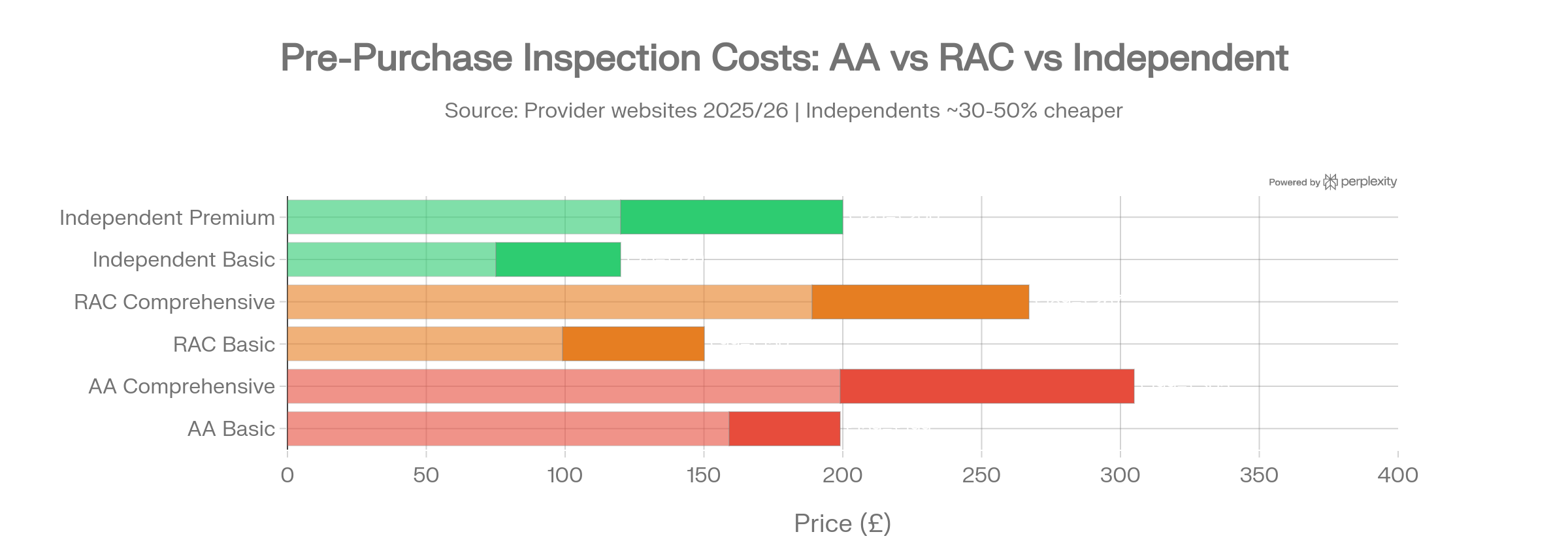
The right choice depends on where the car is. If the car is far away and cannot realistically be moved, a mobile inspection from the AA or RAC can still be useful. But for a local Coventry purchase, an independent workshop inspection usually gives you more depth because the car can go on the ramp and you can talk directly to the technician who inspected it.
| Provider | Basic inspection | More comprehensive inspection |
|---|---|---|
| AA | £159-£199 | £199-£305 |
| RAC | £99-£150 | £189-£267 |
| Independent garage | £75-£120 | £120-£200 |
The question that matters most
Are they putting the car on a ramp? A kerbside inspection can miss the exact faults that usually cost the most: underbody corrosion, brake-line condition, leaks, worn suspension and poor structural repairs.
Free Tool · DVSA Data
Check a reg free →Free MOT History Check
See mileage timeline, passes, fails and advisories for any UK registration — then book an inspection with details pre-filled.
Is a pre-purchase inspection worth it?
In simple terms, yes. Spend £75 to £150 before buying and you may save £400 on brakes, £800 on a clutch, £1,200 on timing work or far more if the car has hidden finance, write-off history or mileage fraud. Even when the car turns out to be sound, you gain something valuable: real confidence and stronger negotiating ground.
Book a pre-purchase inspection in Coventry
At The Motor Medics, our pre-purchase inspections include a visual check, ramp inspection, OBD scan, MOT-history review and straightforward feedback on what is a deal-breaker, what is negotiable and what is simply routine wear. No pressure, no padded quote, and no pretending a bad car is a good one.
For workshop help with this issue, see our pre-purchase car inspection in Coventry service.
Local Service Areas: We provide expert vehicle servicing, diagnostics, and repairs for drivers across the West Midlands. Whether you need a garage in Coventry, Solihull, Kenilworth, Berkswell, Meriden, or Balsall Common, our workshop is easily accessible.
Thinking of buying a used car? Let us inspect it first.
Independent Coventry pre-purchase inspections with ramp access, fault-code checks and honest repair estimates before you hand over a penny.


