
SERVICES · ELECTRICAL
Electrical & Starting Issues
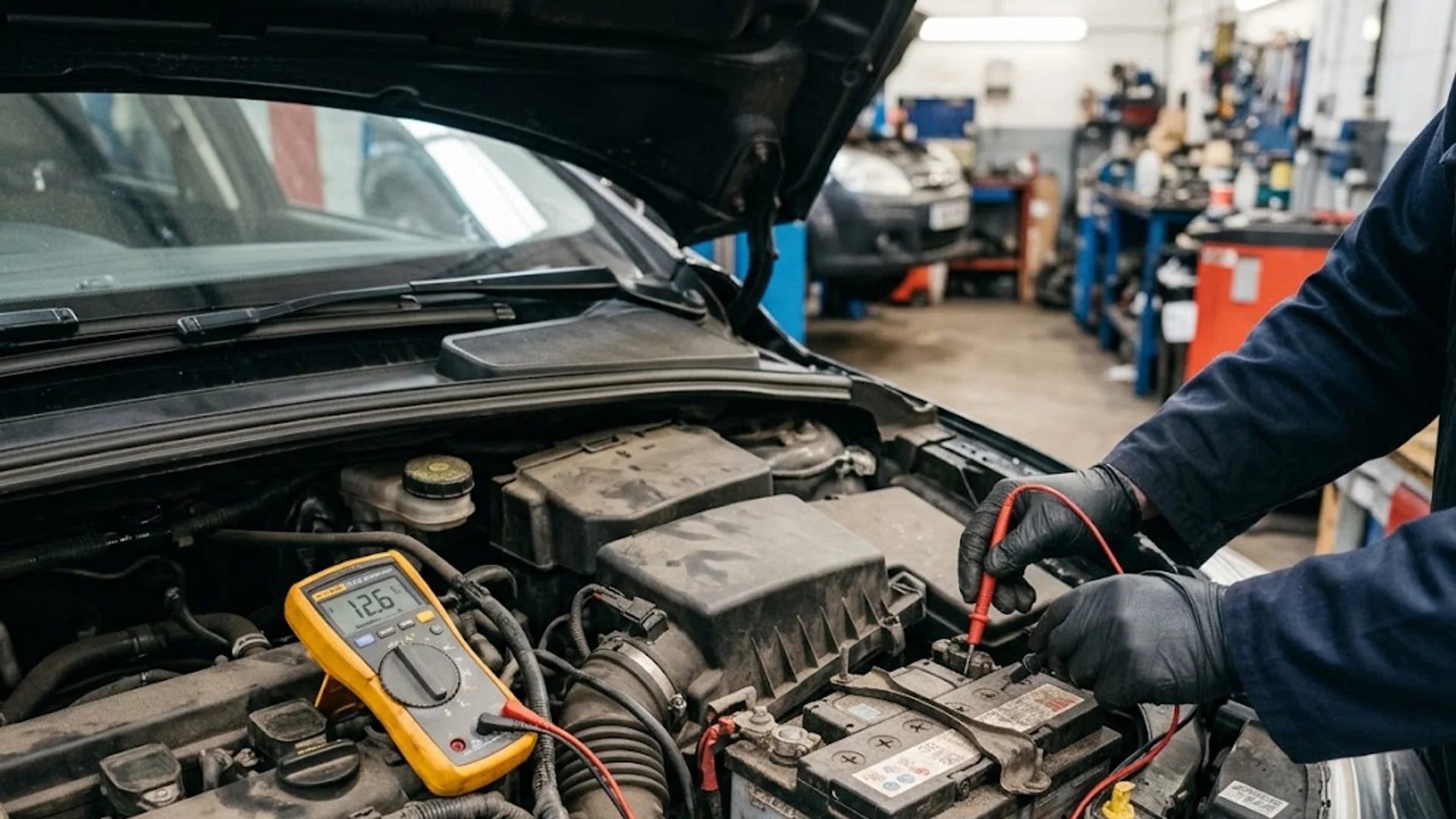
Reliable diagnosis and repair of battery, charging, and electrical faults — so a slow crank or dead start doesn't catch you out again.
What we do
A flat battery is rarely just about the battery.
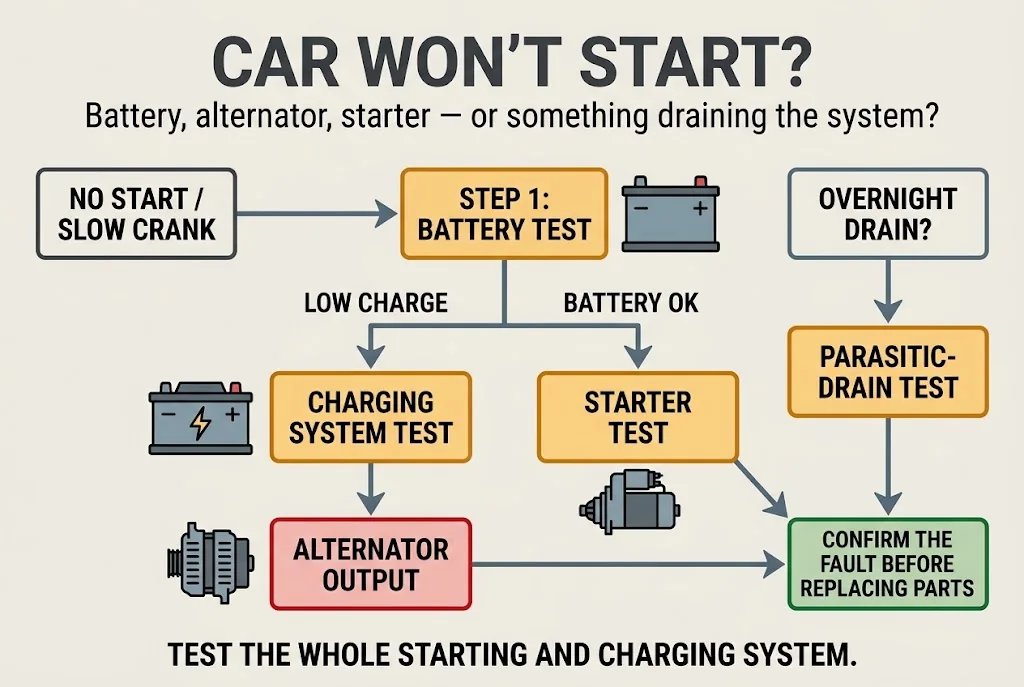
A slow crank or dead start can point to the battery, the alternator, the starter motor, or a parasitic drain quietly draining power overnight. Replacing the battery without testing the charging system just means you'll be back here in six months.
We test the whole electrical system together — battery, alternator output, and starter draw — so you fix the actual cause, not just the symptom.
- Battery and charging tests
- Alternators & starter motors
- Electrical fault tracing
Why choose The Motor Medics?
Clear work. Clear answers.
Evidence-led checks
We inspect and test before recommending parts or repair work.
Experienced technicians
Modern equipment is paired with practical workshop experience.
Clear priorities
You’ll know what needs attention now and what can sensibly wait.
Honest approval
No repair begins until the findings and price have been explained.
What’s included
Every electrical booking can cover this
Battery and charging tests
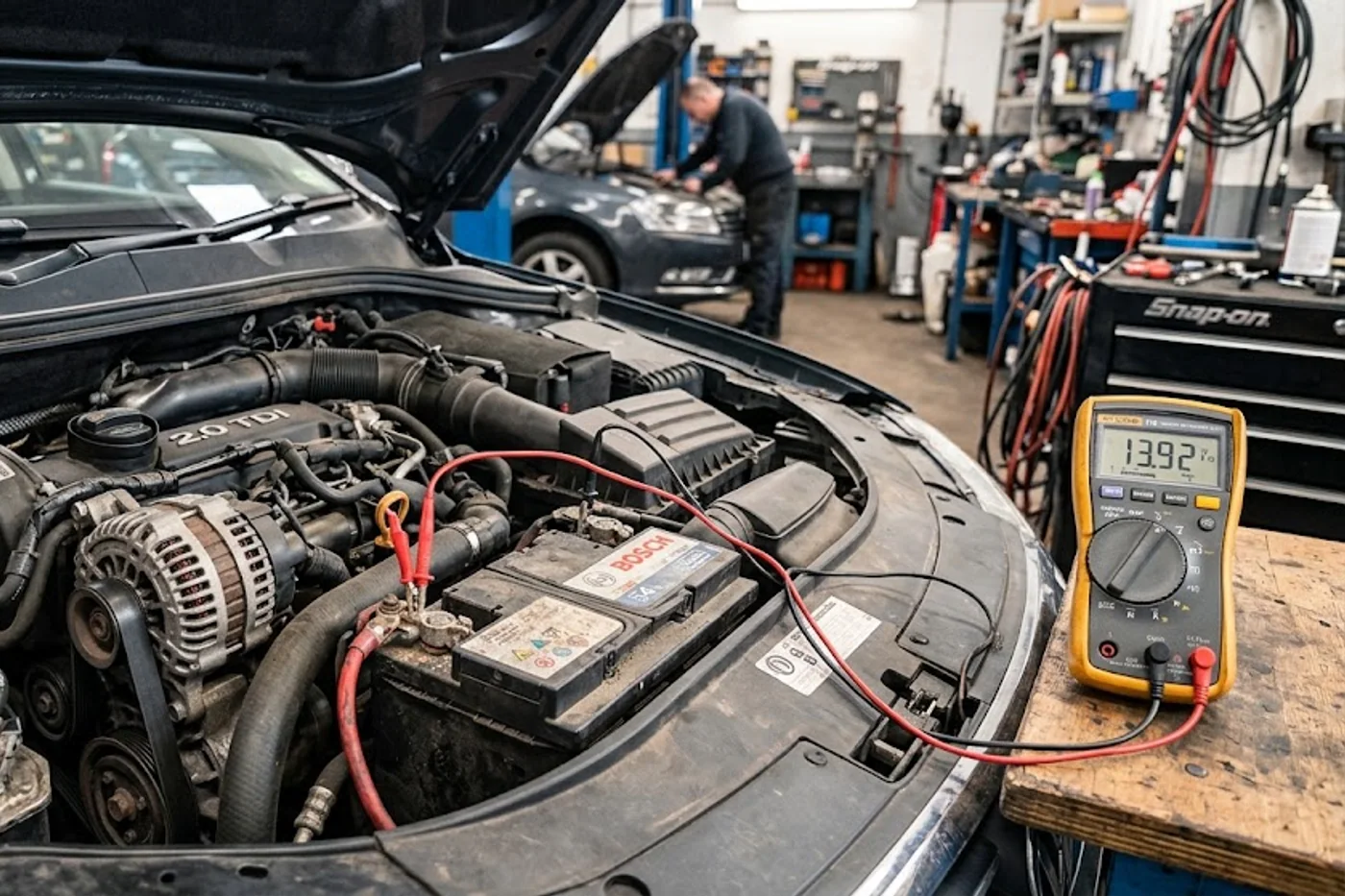
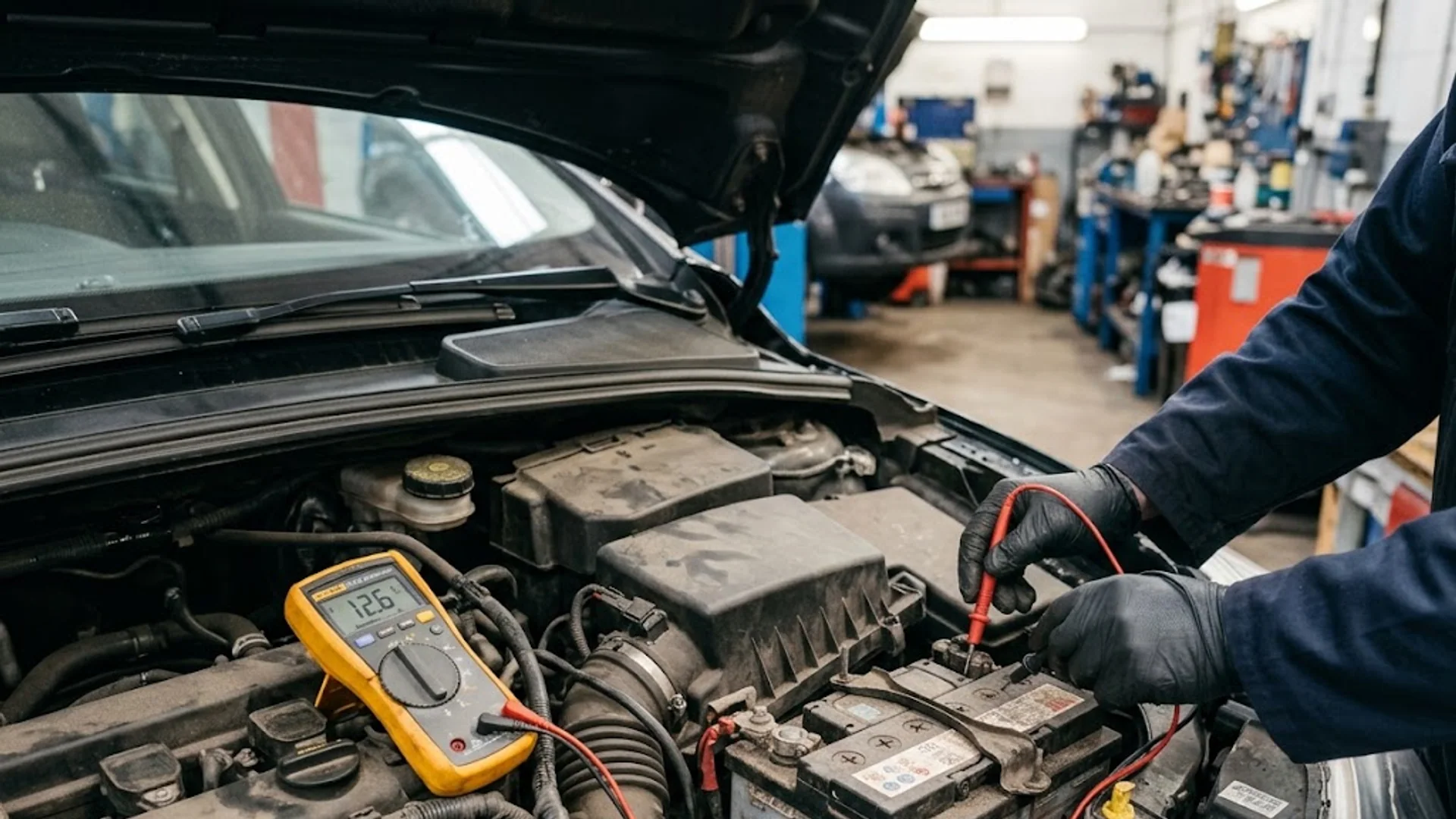
Load testing and charging voltage checks to confirm whether it's the battery, the alternator, or both.
Alternators & starter motors
Diagnosis and replacement of the components that keep your battery charged and your engine turning over.
Electrical fault tracing
Methodical tracing of wiring faults, parasitic drains and warning lights — not guesswork.
Test the circuit, then repair it
Auto electrical fault finding in Coventry
A flat battery or no-start can come from the battery, alternator, starter, wiring, relays, sensors or an unwanted electrical drain.
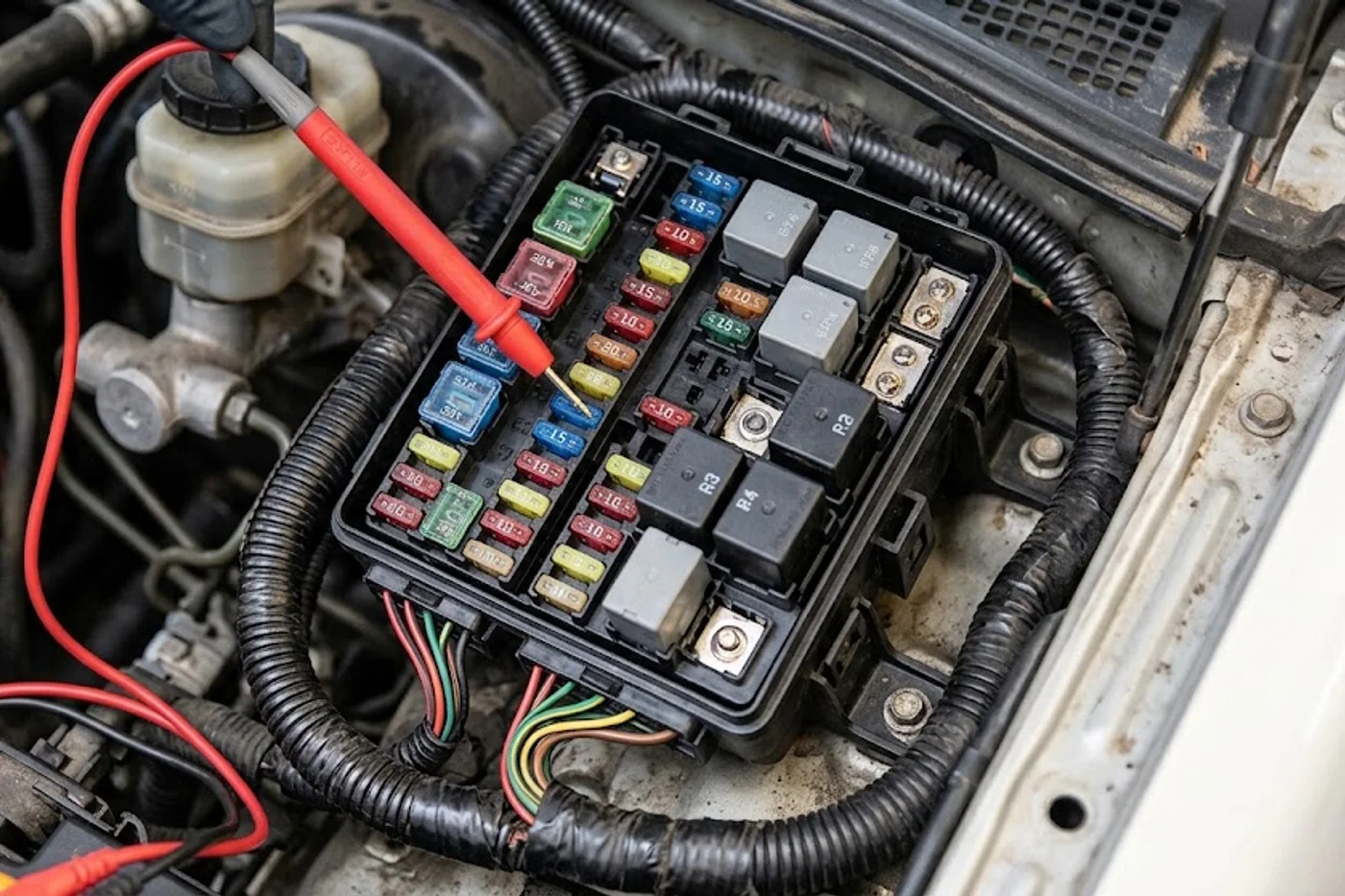
We test voltage, charging output, starting performance and the relevant circuits before recommending parts. That matters because replacing a battery will not cure an alternator fault or an overnight drain.
Our electrical diagnostics cover intermittent starting, charging warnings, blown fuses, poor connections, lighting faults and many sensor or control-system issues.
- Battery and alternator tests
- Starter and circuit checks
- Fuse, relay and wiring diagnosis
Simple process
How an electrical booking works
Describe the symptom
Slow crank, dead start, dashboard flicker or a battery light — tell us what you're seeing when you book.
Battery, charging & starter test
We test the full system, not just the battery, to find the actual cause.
Clear fix, fairly priced
A plain-English explanation and fixed quote — replace only what's actually at fault.
Test the starting and charging system
Car will not start: battery, alternator, starter or electrical drain?
A no-start symptom does not automatically mean the battery needs replacing.
Rapid clicking or slow cranking can indicate low battery voltage, but the reason may be an ageing battery, poor connection, failed alternator or an electrical drain while the car is parked. A single click can point towards the starter circuit, while normal cranking without the engine firing leads the diagnosis elsewhere.
We test battery condition, charging output, starter performance and voltage drop across the relevant connections. Where a vehicle repeatedly goes flat overnight, current-draw testing can identify a circuit that remains active. This process prevents a new battery being used to mask a fault that is still present.
- Listen to the starting symptom
- Measure voltage and output
- Trace abnormal current draw
Straightforward pricing
Electrical & Starting Issues
Covers battery, charging and starting system diagnosis and repair — priced once the actual fault is confirmed.
Google reviews
Recent reviews from local drivers
Substantive written feedback pulled from our live Google Business Profile, including the reviewer’s Google profile photo where available.
113+ Google reviews
Frequently asked questions
Electrical & starting FAQ
Not always. A slow or clicking crank is often the battery, but a charging fault or failing starter motor can look identical. We test all three before replacing anything.
More workshop services
Related services
Explore the checks and repairs most often booked alongside this service.
Ready when you are
Book electrical & starting issues
Send the five quick details above or call the workshop. We’ll confirm the date, explain the next step and keep the quote clear.