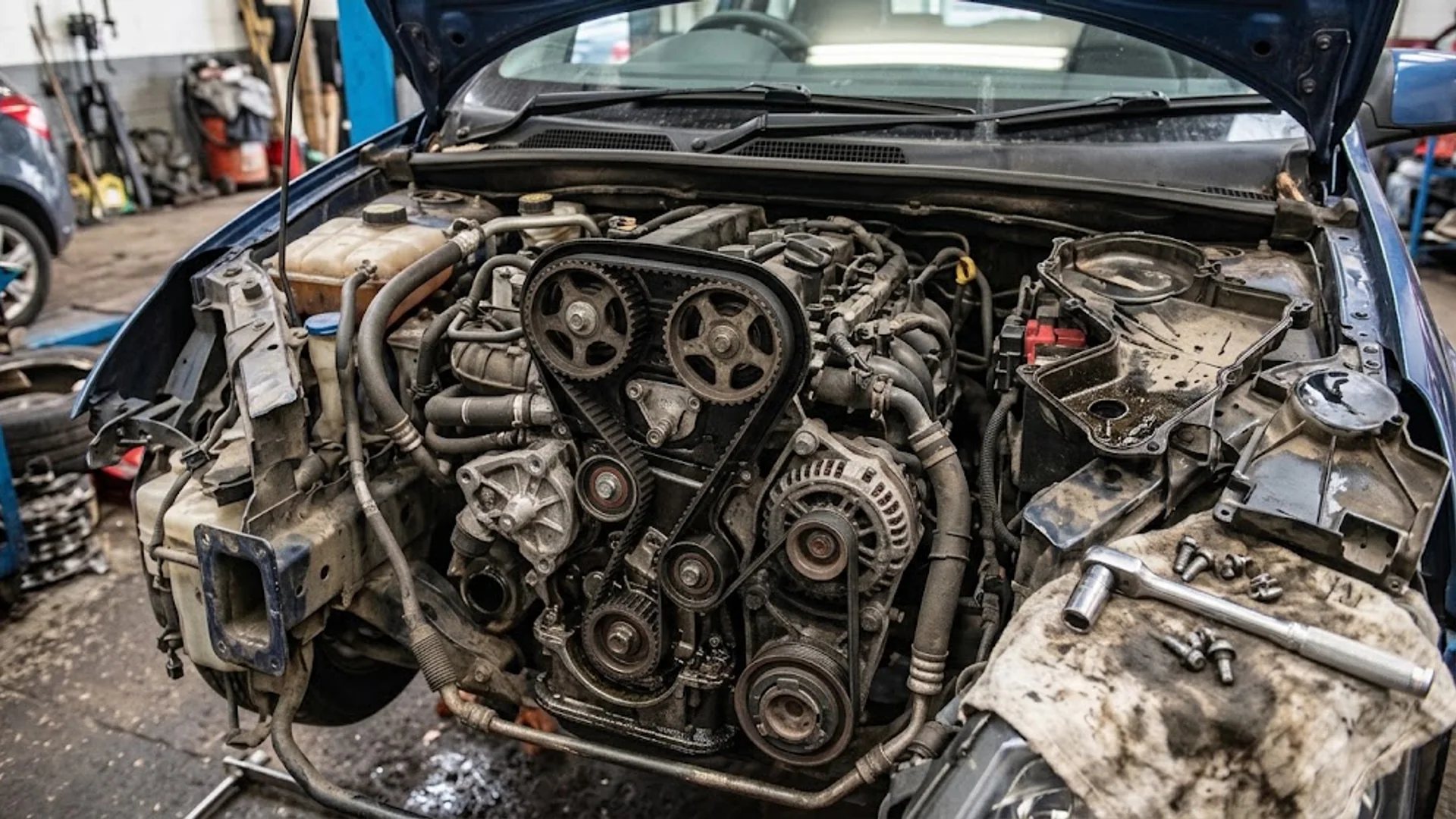
Wet Belt & Cambelt Replacement in Coventry
A worn timing belt is one of the few faults that can write off an engine without warning. We replace wet belts, cambelts and timing components properly — with honest advice, clear quotes, and no invented faults.
Starting from
£349
Google rating
5.0
Social proof
105+
Cached Google reviews shown site-wide

What drivers usually want to know
What Is a Wet Belt — and Why Should You Care?
A wet belt is a timing belt that runs inside the engine, sitting in engine oil, rather than on the outside like a traditional cambelt. Manufacturers like Ford and Peugeot moved to this design to make engines quieter and more efficient — but it created a new problem.
Useful first step
Could Your Belt Be on Its Way Out?
Tick anything that sounds familiar. Most wet belts give little or no warning, so even one or two ticks are worth a quick check before they become a much bigger job.
Select any symptoms that match
We will give you a quick sense of urgency before you book.
Straight pricing
What's It Likely to Cost on Your Car?
Pick your engine family for a realistic price range. Every job still gets a clear, fixed quote in writing before any work begins — this is just to help you plan ahead.
Typical range
£349 - £549
One of the most common wet belt jobs we see, especially on 2012–2018 engines. Tensioners and pulleys are usually worth replacing alongside the belt.
Starting point
Belt & tensioners only
What you are actually paying for
What is included
Shorter page, clearer answers. These are the parts of the job most drivers care about before they book.
Wet belt or cambelt replacement
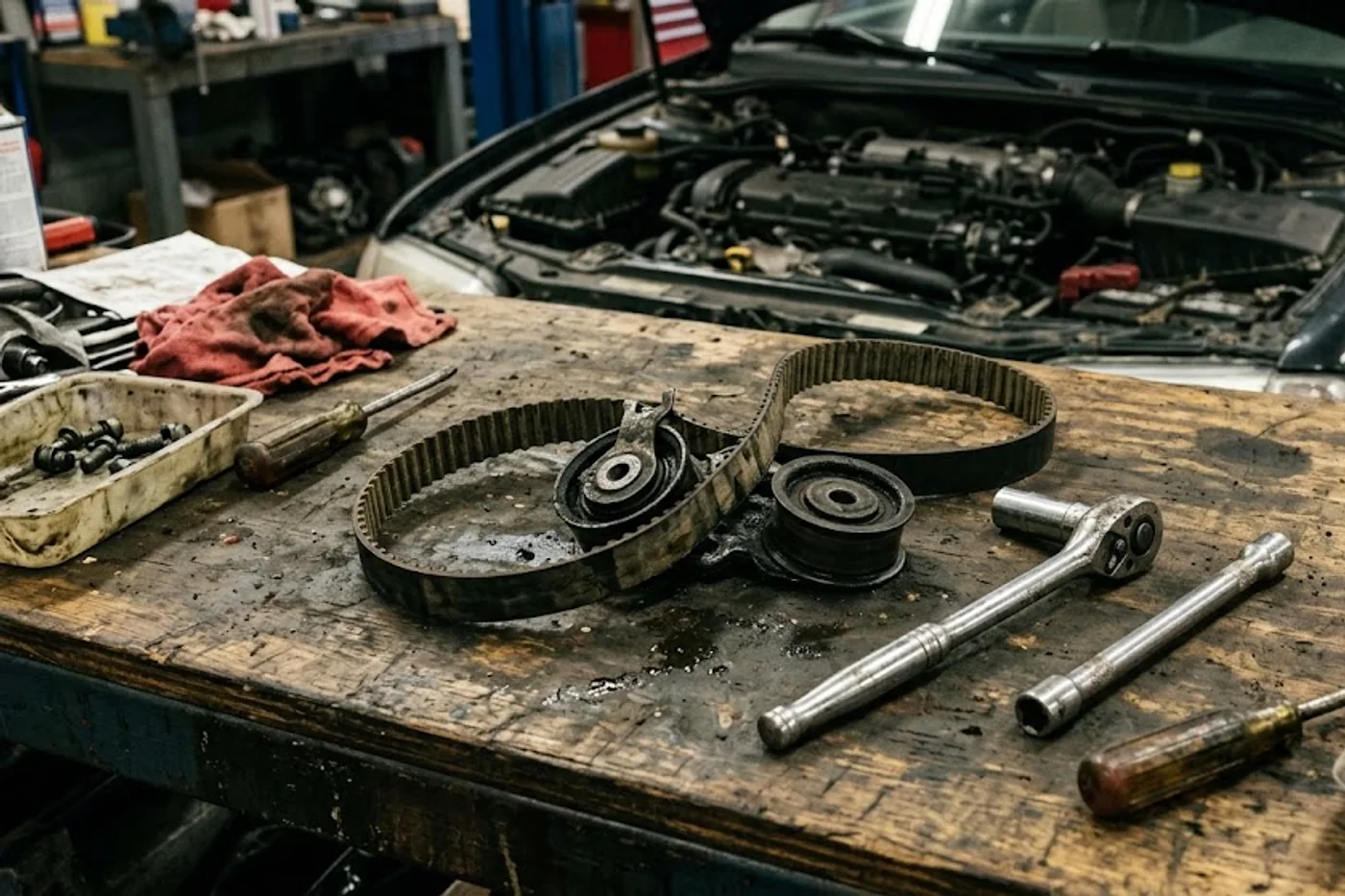
The timing belt is removed and replaced with a quality new belt, set to the correct tension and timing.
Tensioner and idler renewal
Tensioners and guide pulleys are typically replaced alongside the belt to prevent premature failure.
Water pump replacement (if recommended)
On many engines the water pump is driven by the timing belt — replacing it at the same time avoids doing the job twice.
Oil pump inspection or renewal
On wet belt engines, oil pump condition is checked and renewed where needed to protect against oil starvation.
The honest explanation
Wet Belts vs Cambelts — What’s the Difference?
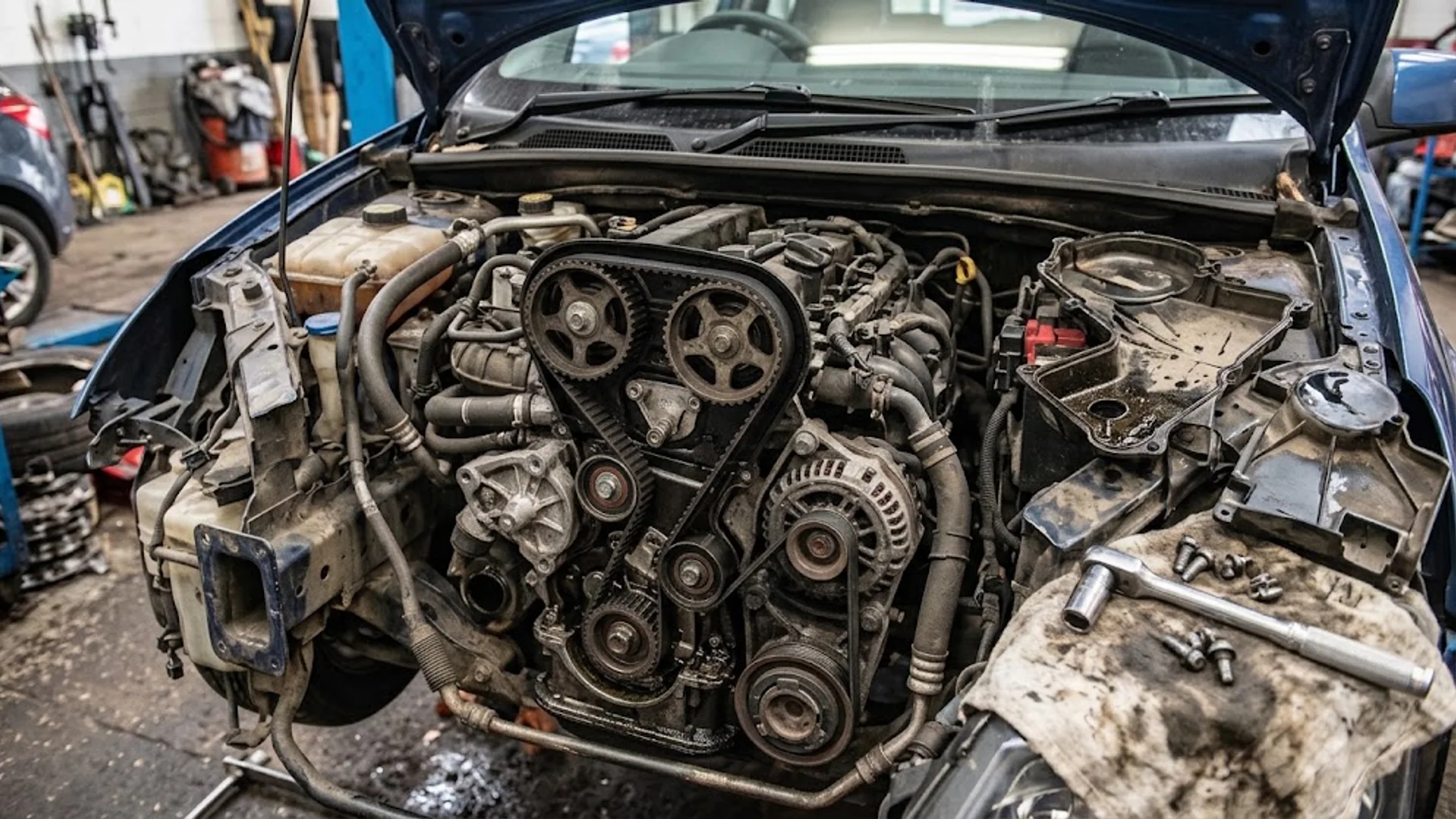
A cambelt (timing belt) runs on the outside of the engine and keeps the camshaft and crankshaft in sync. When it wears out or snaps, the valves and pistons can collide — causing severe and often terminal engine damage. Replacement at the correct interval is essential.
A wet belt does the same job, but it runs inside the engine, bathed in engine oil. This design was introduced to reduce noise and improve efficiency, but it created a new failure mode: over time, the oil degrades the rubber, and small fragments can break off and block the oil pump pickup. When that happens, the engine is starved of oil — and the damage is usually catastrophic.
How we handle it
How We Handle Your Belt Replacement
Check & Confirm
We identify your exact engine, check the history, and confirm whether the belt is genuinely due.
Fixed Quote
You get a clear, written quote — including water pump and oil pump if we recommend doing them together.
Done Properly
We fit quality parts, set the timing correctly, and complete the job — usually within a day.
Guaranteed
You drive away with a 12-month parts guarantee and a clear record of the work done.
Useful details if you want them
Common questions before booking
Which Engines Are Most Commonly Affected?
Wet belt designs are most commonly associated with two engine families that are widespread across the UK car market.
The Ford 1.0 EcoBoost engine, found in models such as the Fiesta, Focus, Puma, EcoSport, B-Max, and C-Max, uses a wet belt system. Engines produced from around 2012 to 2019 are most commonly affected, and Ford has progressively updated replacement intervals as awareness of the issue has grown.
The PSA/Stellantis 1.2 PureTech engine, used across Peugeot (208, 2008, 3008), Citroën (C3, C4), Vauxhall (Corsa, Mokka), DS (3, 4), and the Toyota Aygo X, also uses a wet belt. These engines have been in production since around 2013 and share similar replacement concerns.
We also replace conventional cambelts and timing chains across most other makes and models. If you are unsure whether your engine has a wet belt or cambelt, we can check for you quickly.
When Should You Replace Your Belt?
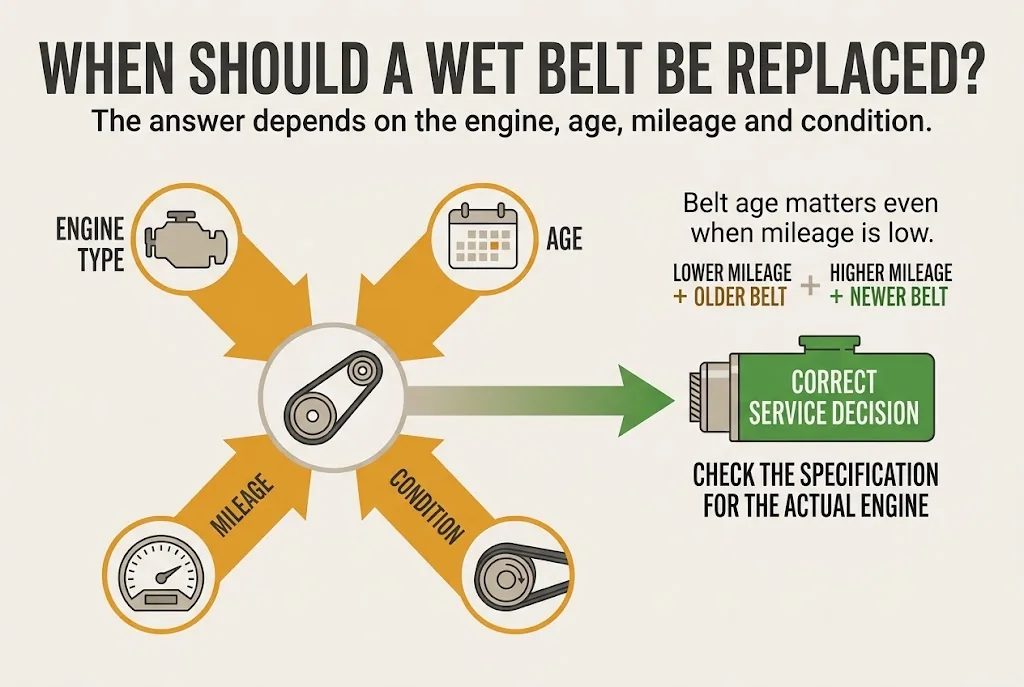
Manufacturer intervals vary, but many wet belts are now recommended for replacement at around 6 years or between 60,000 and 100,000 miles — whichever comes first. Some manufacturers have revised intervals downward as more real-world data has emerged.
The difficulty with wet belts is that they often give little or no warning before failure. There may be no dashboard light, no obvious noise, and no change in how the car drives — right up until the point of failure. That is why interval-based replacement is so important.
If you have bought a used car with no clear service history, or you are unsure whether the belt has been done, it is worth having it checked sooner rather than later. We would always rather inspect a belt and tell you it is fine than see a vehicle towed in with a destroyed engine.
Why Correct Timing Tools and Procedures Matter
Timing belt work is not a job where shortcuts are safe. The camshaft and crankshaft must be locked in their exact positions before the old belt is removed, and the new belt must be fitted with the correct tension and alignment. Even a small error can cause the engine to run poorly — or cause immediate internal damage on startup.
We use manufacturer-approved locking and timing tools for every belt job, and we verify the timing before and after the work is complete. This is especially important on interference engines, where there is zero tolerance for timing errors.
All parts are sourced from quality suppliers, and every job is covered by a 12-month parts guarantee. The work is recorded in your service history so future owners or garages can verify when the belt was last replaced.
Genuine proof
Recent Google reviews
alastair banks
2 weeks ago
They are friendly, knowledgeable, and most important honest company. I took my car to them after being told by another local garage, that I needed my front calipers replacing, as well as discs and pads. They quoted £1100 + vat. Which is crazy for a 13 y/o kia. The Motor Medics checked the calipers are fine, discs and pads for nearly £1000 less. Great work and communications at all times. I cannot recommend them enough.
Will Stevenette
2 months ago
Very happy with the service. Their quote was £200 cheaper than the garage that did my MOT and they were able to do it far quicker. Very pleased and thankful
Vittoria W
2 months ago
So happy with the service recently received from these three amazing guys. Having never heard of them (despite living nearby!) but reading excellent reviews on a local village facebook page, I decided to give them a go … and im just so glad i did! They diagnosed & fixed my poorly little cars multiple problems. A tiny glitch occurred not long after the major repairs, which they kindly sorted in minutes with no drama. Im so happy to have finally found a decent, trustworthy & professional mechanic, who i can rely on. Location and convenience of appointments also fits in with my work/life 🤩HIGHLY RECOMMEND🤩
FAQ
Wet Belt FAQs
What is a wet belt and why does it fail?+
A wet belt is a timing belt that runs inside the engine, bathed in engine oil, rather than on the outside like a traditional cambelt. Over time the oil breaks the rubber down, and small fragments can block the oil pump pickup — which can lead to catastrophic engine damage. It's most common on Ford EcoBoost (1.0, 2012-2018) and PSA/Stellantis PureTech (1.2, 2013 onwards) engines.
How much does a wet belt or cambelt replacement cost in Coventry?+
Wet belt and cambelt work starts from £349 and typically falls between £349 and £750 depending on your engine and which extras are included. The final price depends on whether the water pump and oil pump are replaced at the same time, and parts availability. We always give you a clear, fixed quote before any work begins — never a surprise bill. Use the calculator above for an instant estimate on your engine.
When should I replace my wet belt?+
Manufacturer intervals vary, but many wet belts are now recommended for replacement around every 6 years or 60,000–100,000 miles, and some makers have brought intervals forward. If you're unsure, we'll check your service history and engine and give you honest advice rather than selling you work you don't need yet.
How long does the job take?+
Most wet belt and cambelt jobs are completed within a single working day. More involved engine work may take longer, and we'll always tell you up front so you can plan around it.
Which engines are most affected by wet belt problems?+
The most affected are the Ford 1.0 EcoBoost (2012-2018, Fiesta, Focus, Puma, EcoSport) and the PSA/Stellantis 1.2 PureTech (2013 onwards, Peugeot 208/2008/3008, Citroën C3/C4, Vauxhall Corsa/Mokka, DS models). We replace belts on these and many other makes and models.
Helpful next steps
Related advice and services
Ready when you are
Want straight advice before you commit?
Tell us the symptoms, vehicle, or warning light. We will tell you what it likely needs, what can wait, and what is worth booking now.